It Started With a Dartboard.
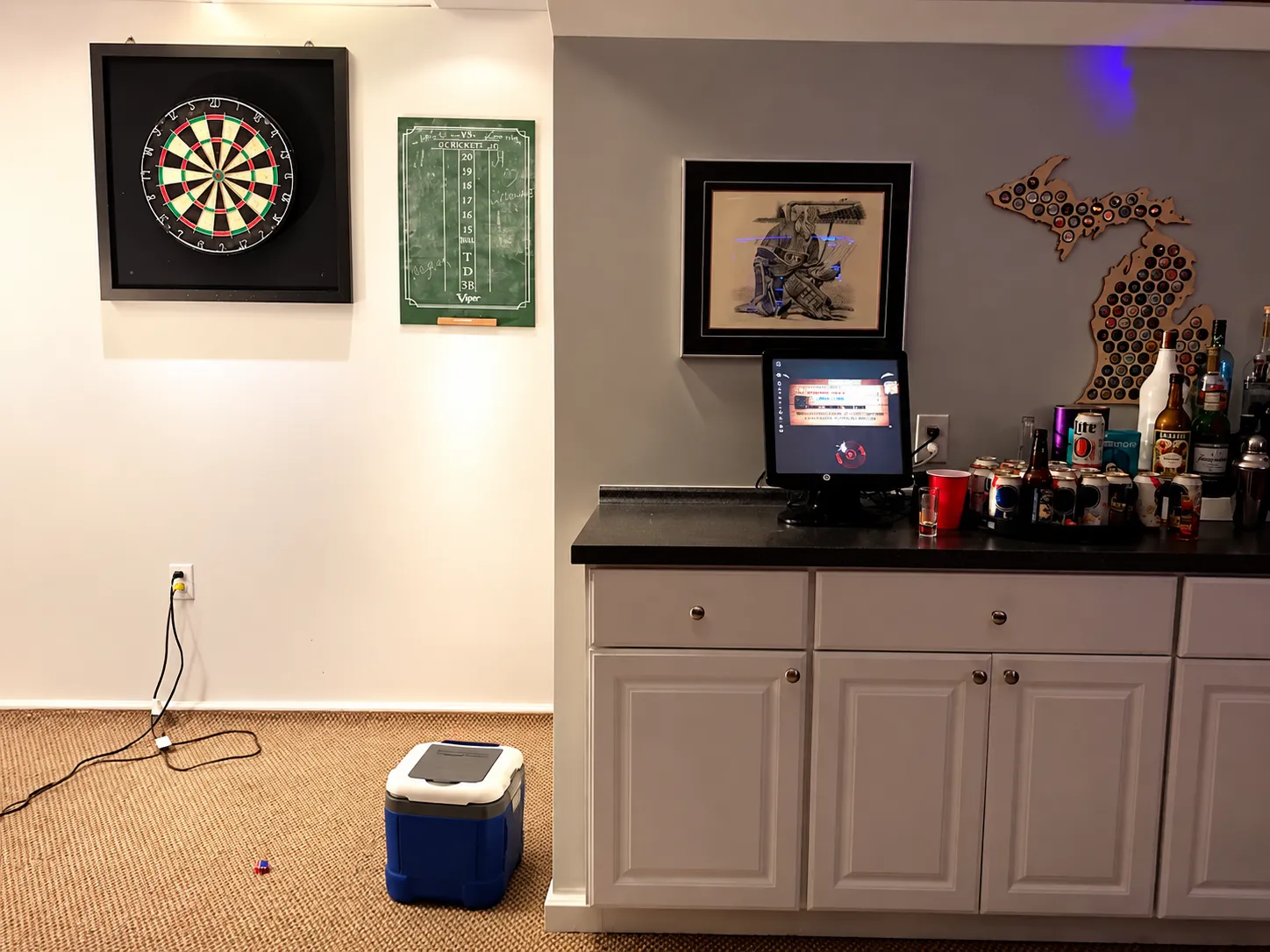
I was traveling a lot for work, I found myself in establishments that served good food and cold beer. These places typically had electronic dartboards, and my colleagues and I would spend many nights — and many dollars — after work playing on those things.
Once I stopped traveling, I felt a void. I started looking into buying one of those electronic boards for myself, but when I saw what they cost, I had almost given up on the idea.
Then it dawned on me: why not just get a steel-tip dartboard? So, off to Amazon I went. I ordered a steel-tip board, a Cricket chalkboard, and some chalk.
From Chalk to a Touchscreen
I'm a bit of a programmer — a real programmer would probably disagree — but I've always been pretty good at coding and making it work for whatever I was doing. Google was my best friend.
I was able to get my hands on a small touchscreen, and that got me thinking: instead of keeping score with chalk, why couldn't I use a touchscreen?
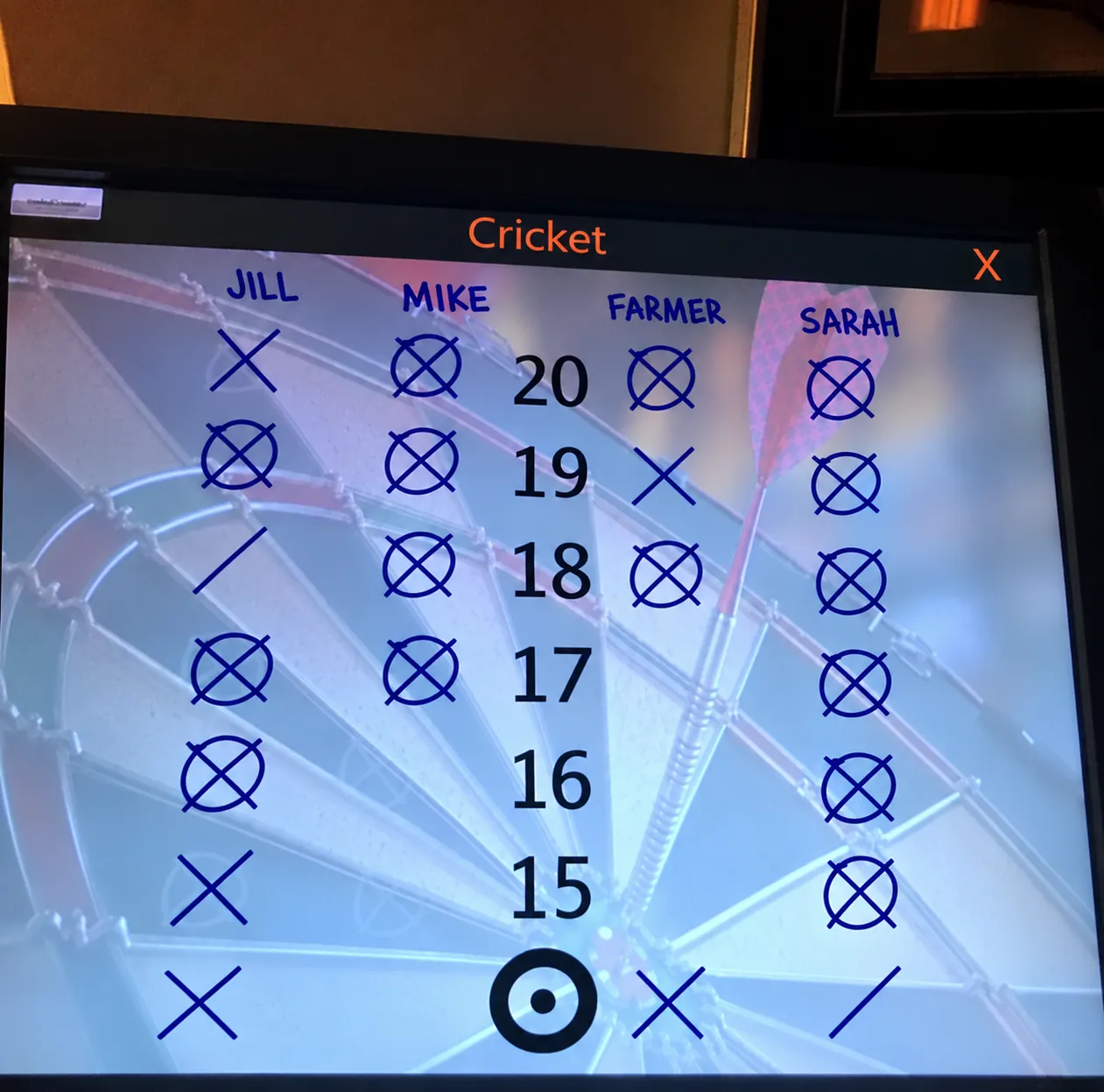
So I built it. That first version was pretty simple. Each time you touched a number to close it, the marks on the screen would turn blue. Behind the scenes, it kept track of the game and determined the winner just like Cricket should — close everything out and have the most points.
It wasn't Foxhole Social. It wasn't even close. But it worked.
Holy Shit. What?
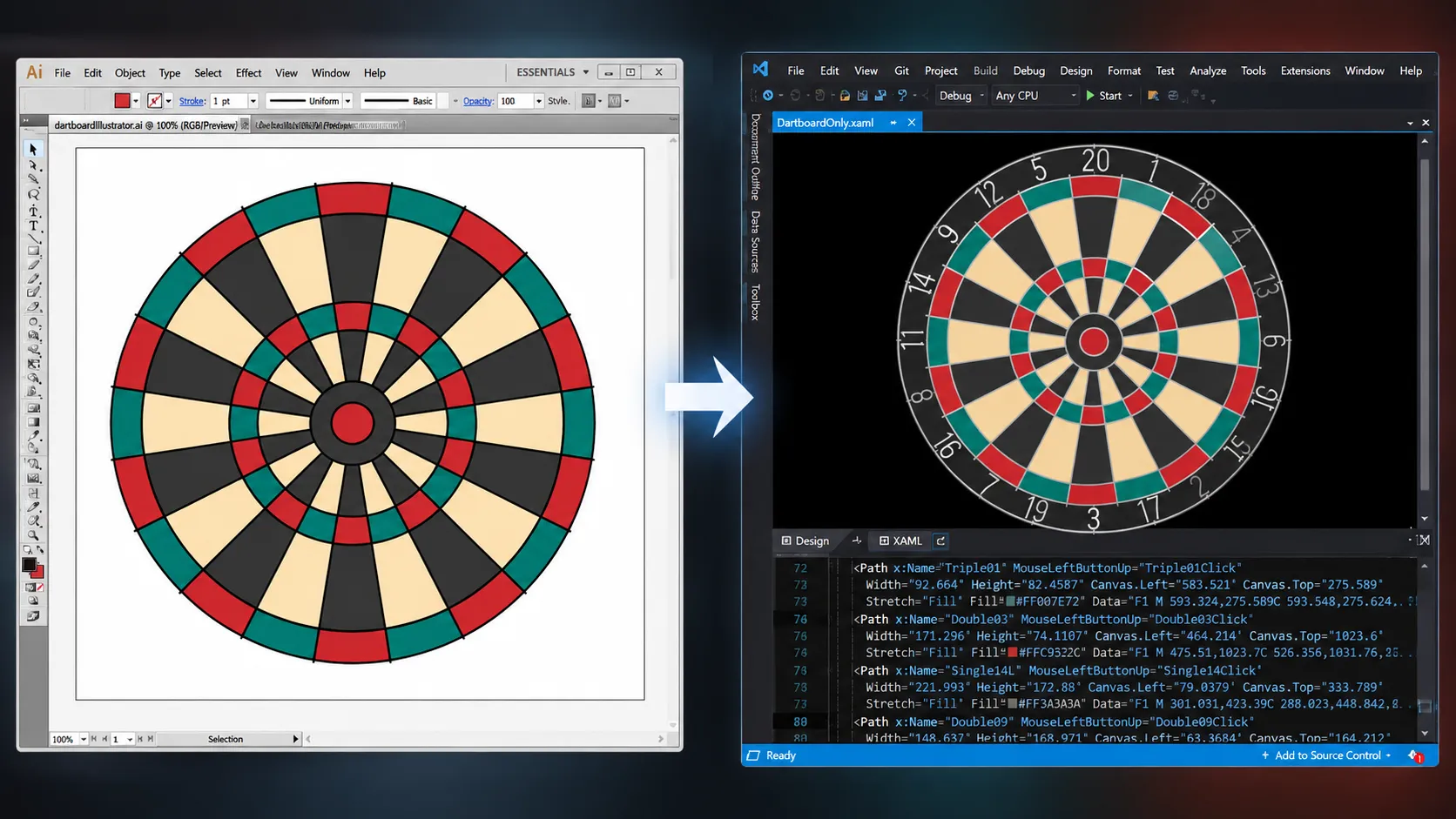
Somewhere, I discovered that I could take an Adobe Illustrator file and turn it into something called XAML. So I used Illustrator to manually draw every ring and every segment of a dartboard. I converted that drawing to an SVG, which could then be converted into XAML.
In simple terms, my drawing became clickable.
That was my “AH HA!” moment — or, as the title suggests, more of a “Holy shit! ” moment. Suddenly, I wasn't limited to buttons and boxes anymore. I could actually build a dartboard on the screen and make every part of it do something.
Many designs later, I finally came up with a board that was actually usable. The rings had to be a little thicker than they are on a real dartboard because, well... there are some fat-fingered people out there.(Speaking from experience) Trying to tap those tiny doubles and triples on a touchscreen proved to be a little tedious.
Especially since I hadn't figured out how to make an Undo button yet.
Stay tuned for that one.
The Board Got Real
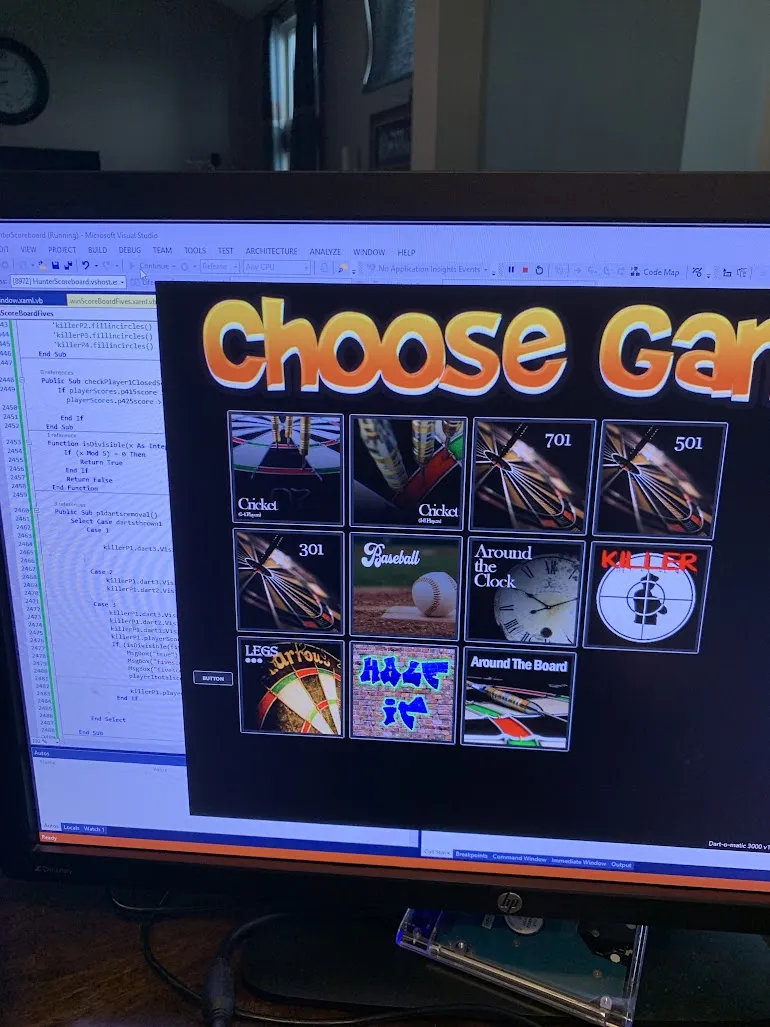
Once I started, I kind of got obsessed — not gonna lie. I started out with some pretty basic games, as you can see here. I thought I had better photos of my progress, but I don't. I figured if I could start with these, this would be enough.
I mean, how many dart games are there?
All in all, this was a pretty fun project, and it really got the creative juices flowing. Once I had the ideas down, it was just a matter of writing the code behind them.
I came up with some unique ideas and just kept thinking, “Hey, can I make this work?”
And it went from there.
This Was Supposed to Be the End
This is the version I thought would be the end of my journey. It pretty much took everything I had as a programmer, but it worked — and it worked great. We spent many, many nights in the basement and garage playing with neighbors and friends. They loved it, and I thought I was content.
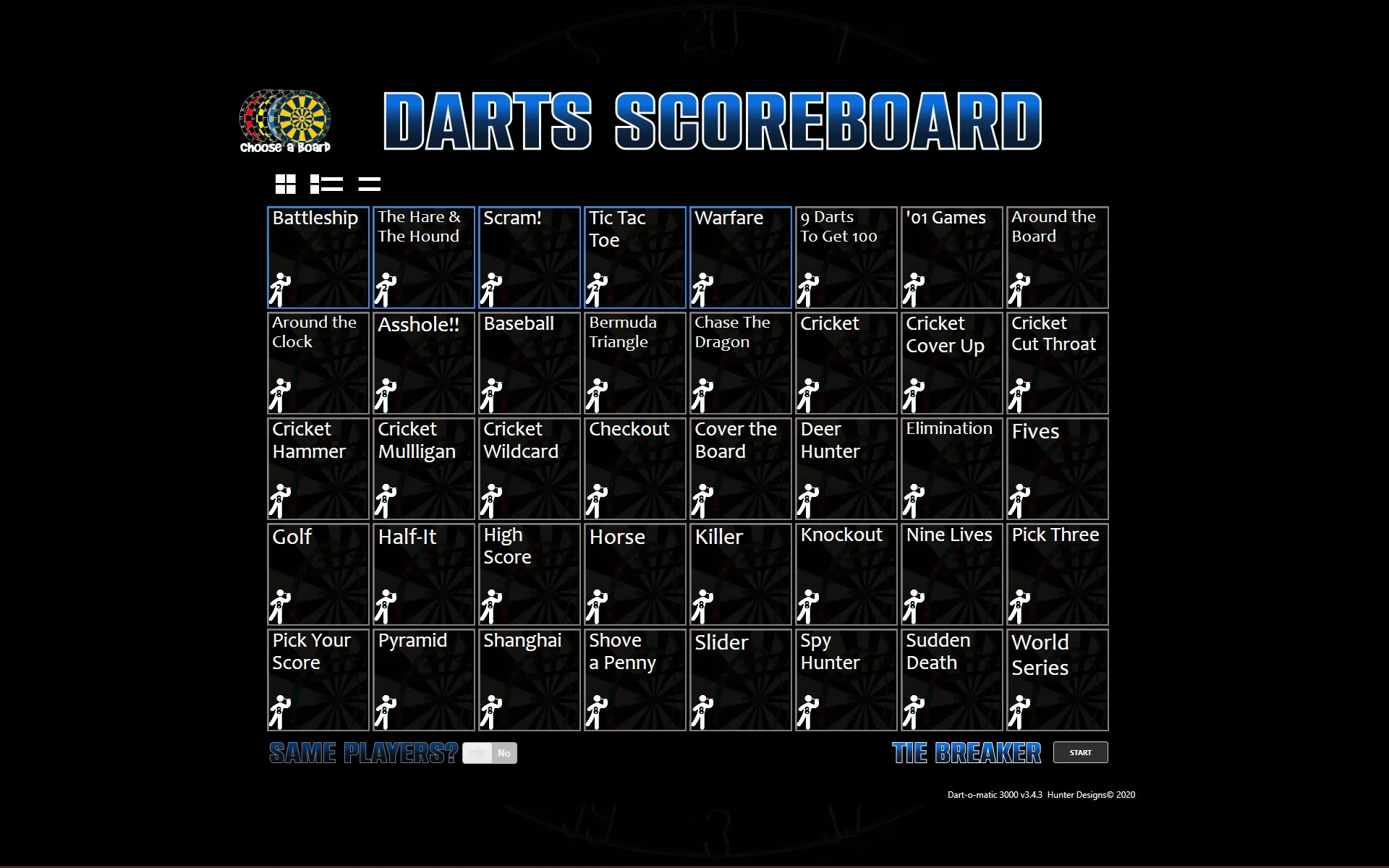
Then I posted a video online somewhere — Reddit, Twitter, I honestly don't remember — and someone asked, “Can I play this on my iPad?” I replied, “You can't.” Their response: “Bummer. This looks really cool. Let me know when I can.”
That simple exchange made me realize the biggest limitation of what I had built: you needed a Windows computer to use it. For something I had considered finished, that really threw me for a loop.
A New Hope
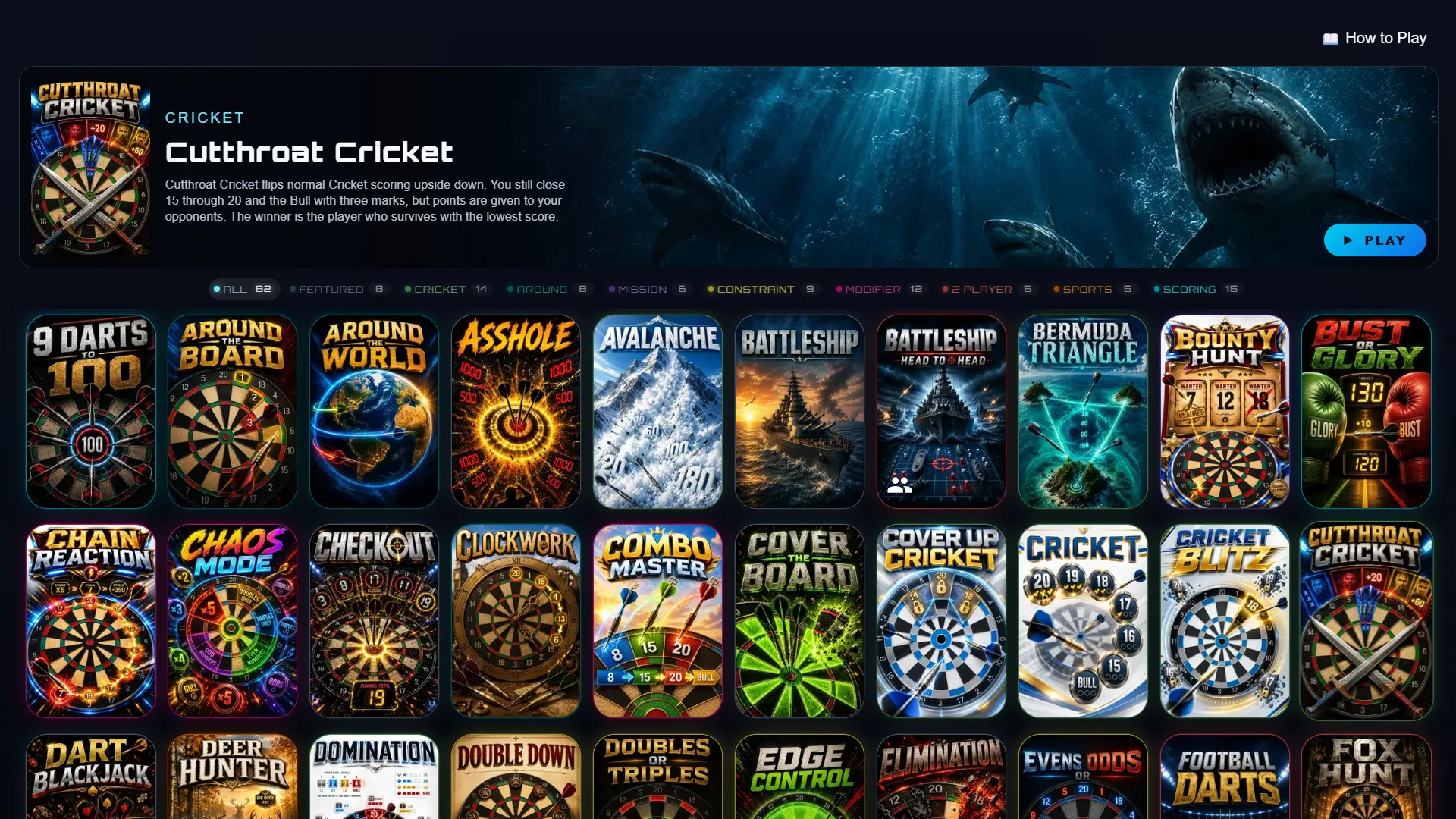
One day on a Teams call, a colleague casually mentioned that he'd used CoPilot to write some code. I'd heard about AI for years — I've been in IT for over 30 — but I guess I'm a little old school. Still, a big-ass light bulb went off.
That night I gave CoPilot the XAML window from my High Score game and asked if it could turn it into HTML and JavaScript. About 30 seconds later, I had a working scoreboard. It wasn't perfect, but it proved something important: this didn't have to be a Windows desktop application anymore.
From there, it became a true team effort. I knew what I wanted the games to do, and AI helped me figure out the pieces I didn't know — or fix the things I inevitably broke. One of the biggest breakthroughs was Undo, something I'd never really solved in the original. Taking a dart away was easy; reversing the score, math, and game progress was another story.
And I'm Still Not Done
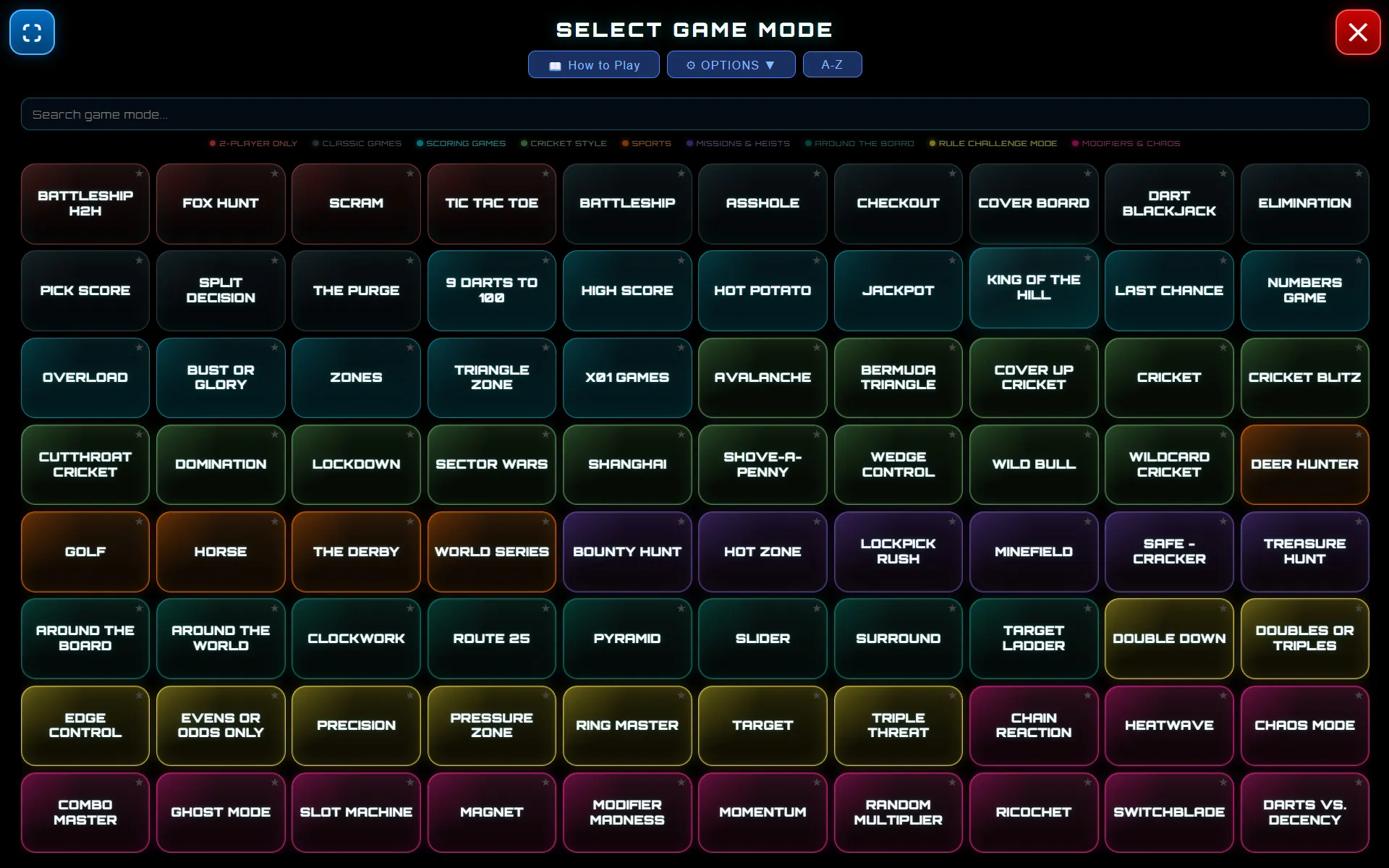
So here we are. About eight months later, with a lot of work, a lot of ideas, and a lot of sacrificed time behind it. But it's been worth it. This has been a passion project of mine for almost ten years. I never set out to build what Foxhole Social has become, but I'm sure glad I did. I'm pretty damn proud of it.
And it's nowhere near done. I still have more ideas than I know what to do with, and there are already things I want to build next. That's really been the story of this whole project — every time I think I'm getting close, another idea shows up. Majority of these games are just wild ideas I had.
If nobody signs up, nobody wants to play, and this never becomes anything bigger than what it is today, then it is what it is. I had fun building it, I learned a ton along the way, and this thing is an absolute blast to play.
So no, this isn't the end of the story. Not even close.